

Planning an IoT Project in Bhutan: 7 Questions Before You Connect Devices
More offices, shops and compounds in Bhutan are connecting sensors, controllers and automated equipment — from door and gate motors to parcel lockers, environment monitors and building controls. Internet of Things (IoT) systems can save time and reduce manual checks, but they only work well when the problem, the site and the support plan are clear before any hardware is ordered.
eDruk Private Limited has been building software, networks and automation in Bhutan since 2004, including systems such as automatic sliding gates and doors and the DrukBees Cube automated parcel pickup point. Before you start an IoT project, these seven questions help you plan a system that people will actually use and that someone can keep running.
1. What job should the system do every day?
Write down one or two concrete tasks: open a gate for authorised vehicles, notify staff when a sensor reading is out of range, let customers collect a parcel without waiting at a counter, or log when a room is occupied. Avoid a long wish list at the start. A focused first version that solves a daily problem is better than a complex network of devices that nobody maintains.
2. Where will the devices live, and what is the site like?
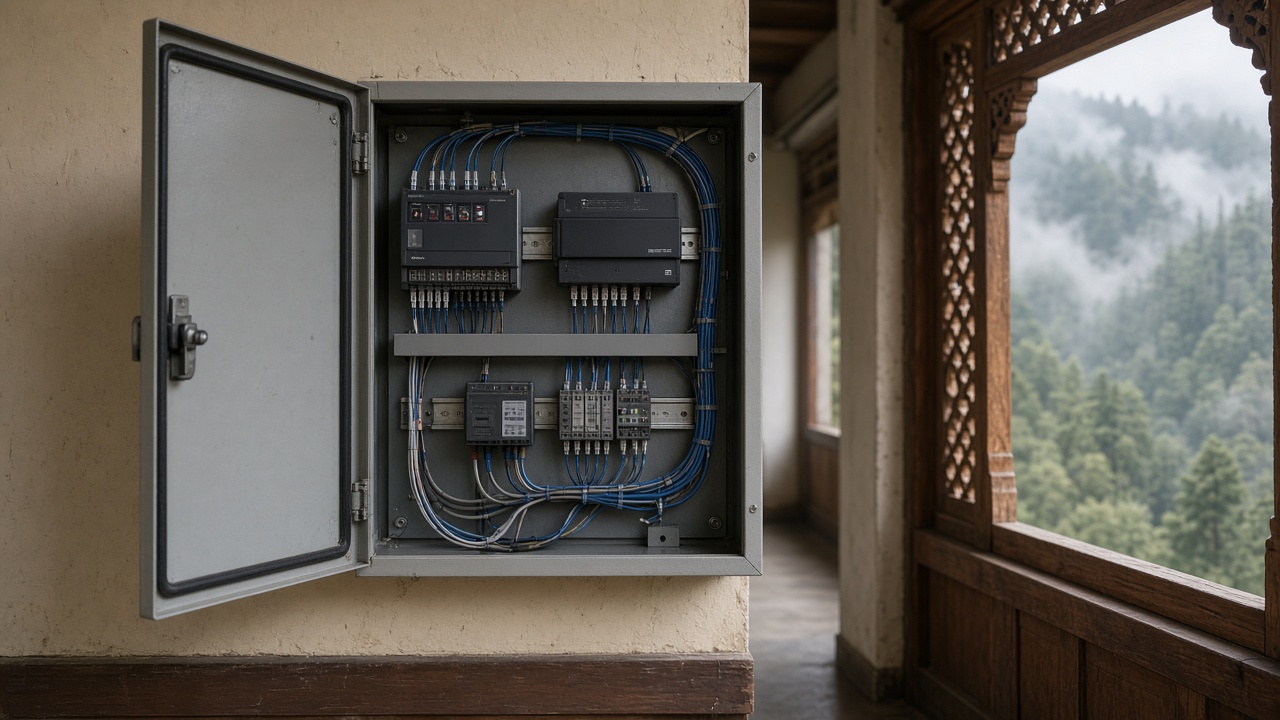
Note power availability, weather exposure, dust, distance between buildings, and whether staff or the public will be near moving parts. Outdoor gates, rooftop sensors and roadside cabinets need different housings and protection from indoor office controllers. A short site walk with photos of mounting points and cable routes prevents surprises during installation.
3. How will devices talk to each other and to your network?
Decide whether devices will use wired Ethernet, Wi-Fi, a dedicated radio link, or a mobile data connection. Poor coverage in a basement, a remote compound or a metal-clad store can break an otherwise good design. Plan how the system joins your existing LAN or internet link, and keep management traffic separate from guest Wi-Fi where that matters for security.
4. Who may control it, and how do you revoke access?
Remotes, keypads, cards, phone apps and admin dashboards all create accounts and credentials. Agree who can open, stop or reconfigure the system, and how you remove access when a staff member or contractor leaves. Default passwords left unchanged are one of the most common ways connected equipment is misused.
5. What happens when the power or internet goes down?
Power cuts and short outages are normal in many places. Decide whether a gate should unlock manually, a locker should keep last-known access rules, or sensors should buffer readings until the link returns. Battery backup, a clean shutdown path and a simple manual override often matter more than a flashy feature list.
6. How will you see faults and keep firmware updated?
Connected devices need someone to notice when a sensor stops reporting, a battery is low, or a controller needs a security update. Plan a basic alert path (email, SMS or a dashboard) and agree who owns updates. Unpatched IoT gear on an office network can become an easy entry point for attackers.
7. Who installs, documents and supports it after go-live?
Ask for labelled cables, a simple diagram of devices and logins, and a clear support path when something fails. Keep admin accounts and documentation in the organisation’s name, not only with one installer. Agree how spare parts, warranty and call-outs work before you depend on the system for daily operations.
Talk through your IoT idea with eDruk
Whether you are considering an automatic entrance, a parcel pickup point such as the DrukBees Cube, building sensors, or another connected control system, eDruk can help you turn these answers into a practical design that fits your site and your team.
Email edruk@edruk.com.bt, call +975 2 332277, or visit https://www.edruk.com.bt.